

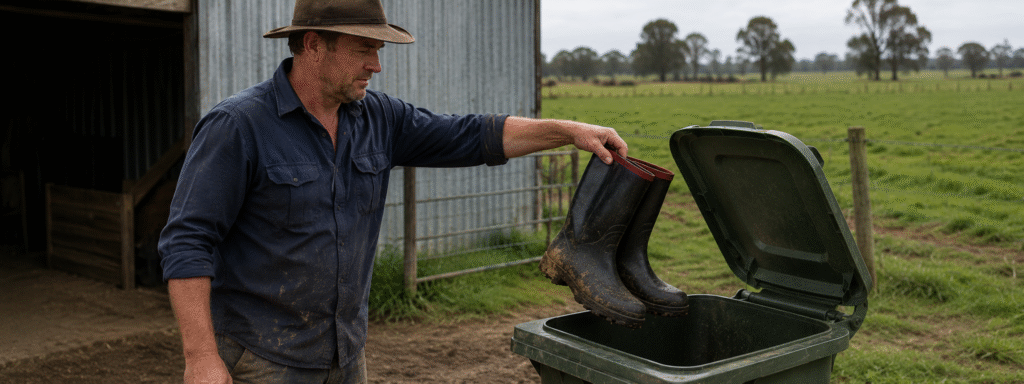
Always Invest in Quality Products Between You and the Ground.
Most Kiwi farmers have experienced at least a few of these issues:
- Heavy boots causing leg fatigue
- Cold feet during winter mornings
- Cracking or splitting in colder temperatures
- Slippery grip in wet sheds
- Sweat and moisture build-up
- Soles wearing out faster than expected
- Boots becoming uncomfortable after long hours on concrete
A lot of traditional gumboots are made from PVC or rubber compounds that simply were not designed for the demands of modern farming environments.
Standing on concrete yards and dairy sheds all day puts serious stress on knees, hips and lower backs. Add wet conditions, effluent, chemicals and long shifts, and it becomes clear why comfort and durability matter.
What Makes Polyurethane Gumboots Different?
Polyurethane, often referred to as PU, is a lighter and more advanced material than standard PVC or rubber.
Premium PU boots like Bekina boots are designed specifically for industrial and agricultural environments where comfort, insulation and durability are critical.
The biggest difference most farmers notice first is the weight.
PU boots are significantly lighter than many traditional gumboots, which can reduce fatigue over the course of a long day. Less weight on your feet means less strain on your legs and lower back, especially during repetitive work.
They also offer:
- Better thermal insulation in cold conditions
- Improved flexibility in winter temperatures
- Strong resistance to chemicals, fats and effluent
- Excellent durability in demanding farm environments
- Shock absorption for hard concrete surfaces
- Slip-resistant outsole designs
For farmers spending hours in dairy sheds or wet paddocks, these differences become noticeable very quickly.
Why Dairy Farmers Are Moving Toward PU Boots
Dairy farming is one of the toughest environments for footwear.
Boots are exposed daily to:
- Water
- Effluent
- Cleaning chemicals
- Concrete
- Mud
- Constant movement
That combination can quickly destroy lower quality footwear.
Many dairy farmers switching to Bekina boots say comfort is the biggest improvement. Lightweight construction and shock absorption can make a major difference during long milking shifts, especially on concrete floors.
Thermal insulation is another big advantage during winter. PU naturally insulates better than standard rubber or PVC, helping keep feet warmer during early morning starts.
Grip also matters. Slippery dairy sheds create real safety risks, and having the right outsole design can improve confidence underfoot in wet conditions.
Do More Expensive Farm Boots Actually Save Money?
At first glance, premium PU boots can cost more than basic gumboots.
But many farmers now look at boots based on cost per season rather than upfront purchase price.
Cheaper boots may need replacing multiple times, especially in high-use environments. Cracking, splitting and sole wear can all shorten lifespan significantly.
Higher quality polyurethane boots are built for durability, which can often mean:
- Fewer replacements
- Better long-term comfort
- Less fatigue
- More reliable performance through winter
When boots are worn every single day, reliability matters.
What To Look For In A Good Farming Boot
Not all farm boots are built the same. Before buying your next pair, it is worth considering:
Comfort
If you are standing for long periods, cushioning and shock absorption become important very quickly.
Weight
Heavy boots increase fatigue over time.
Grip
Slip resistance matters in wet sheds, yards and muddy conditions.
Warmth
Cold feet can make winter mornings miserable.
Durability
Farming environments are hard on footwear, especially around chemicals and effluent.
Safety Features
Depending on the application, toe protection may also be important.
Choosing The Right Boot For Your Farm
Different farming environments have different demands.
Some farmers prioritise lightweight comfort for long dairy shed shifts. Others need extra durability for beef or sheep work across rough terrain.
The important thing is choosing footwear designed for the realities of New Zealand farming conditions, not just the cheapest option on the shelf.
Bekina boots continue to grow in popularity because they are purpose-built for demanding agricultural environments where comfort, warmth and durability matter every day.
Looking To Upgrade Your Farm Footwear?
If you are considering moving from traditional gumboots to polyurethane boots, talk to your local rural safety supplier about the best option for your farming environment.
The right boots can make a bigger difference than most farmers realise, especially after a long day on the farm.
STEPLITE X SOLIDGRIP GUMBOOTS: SUPERIOR GRIP
StepliteX SolidGrip are hard-wearing work gumboots with a wide fitting. They are especially developed for the agriculture sector. According to Farmers Weekly, StepliteX SolidGrip work gumboots provide not only a superior grip, also the ergonomic footbed is much appreciated.
“StepliteX SolidGrip has a cracking value compared with the rest. StepliteX SolidGrip is solid, all-round work boot and makes the others look like a bit of a rip-off.“